Leadership · Meetings · 4 min read
My 1,000 Meeting Epiphany
What thousands of meetings taught me about the difference between copying leadership behaviours and understanding the philosophy behind them.

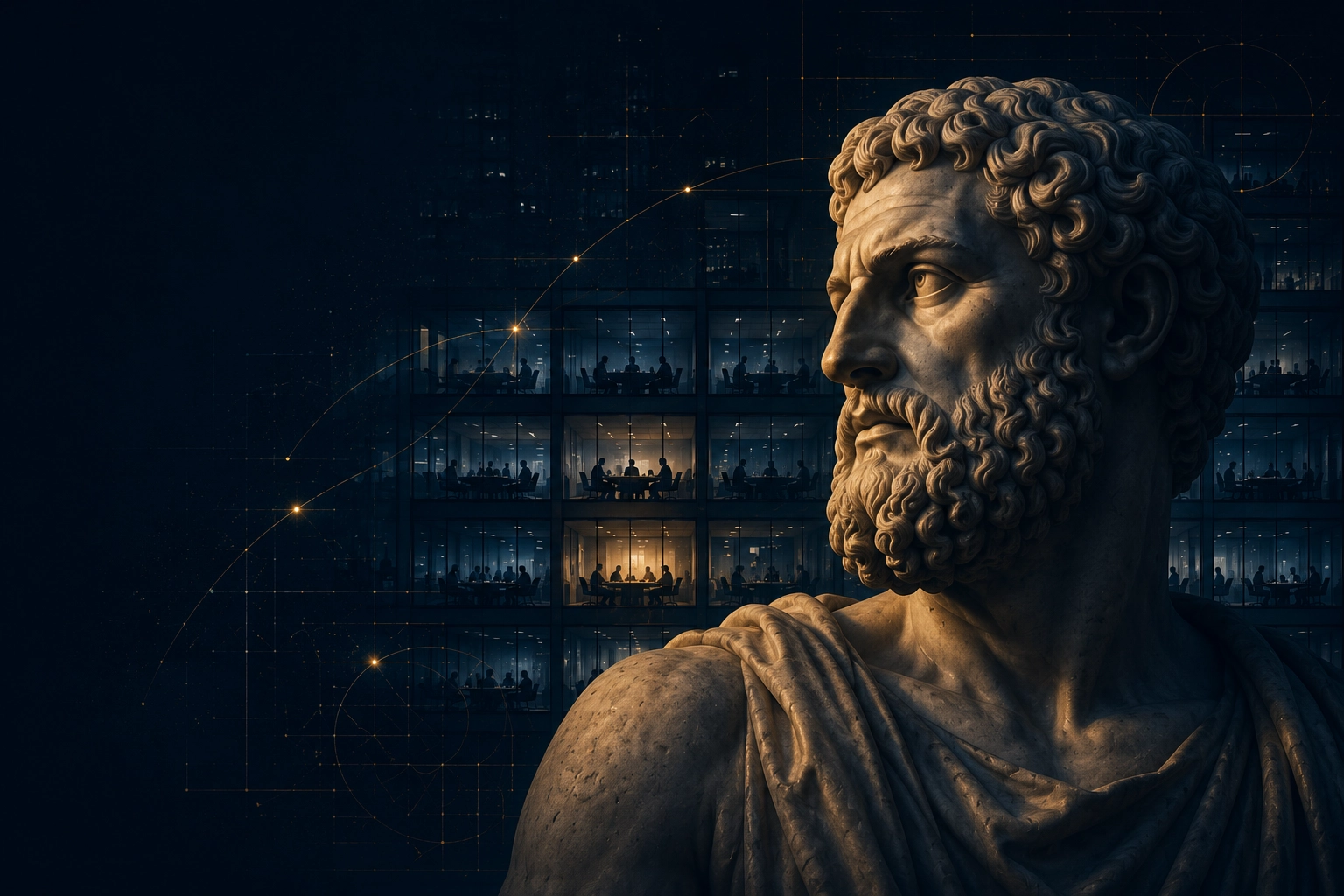
I've attended thousands of meetings throughout my career.
Weekly operational reviews, executive governance meetings, customer steering committees, project updates, leadership forums and countless recurring meetings that quietly fill everyone's calendars.
Some were excellent, many weren't, but for years I assumed the difference came down to organisation. Some managers prepared better than others, some meetings had clearer agendas and some simply had better people in the room.
A recent discussion about Jeff Bezos' approach to meetings made me realise I'd been looking at them too narrowly.
Meetings reveal more than organisation
One bad meeting has never changed my opinion of a leader. We all have difficult days where technology fails, priorities shift or an urgent customer issue takes precedence.
Patterns are different.
Attend the same leader's meetings for a few months and you begin to notice what they consistently reinforce, what they quietly tolerate and, perhaps most importantly, what they never seem to notice.
That, more than any leadership presentation or corporate value statement, tells me what kind of leader they are.
The leaders who have earned my respect throughout my career have almost always run disciplined meetings. I don't mean rigid meetings or joyless meetings. I mean meetings with purpose.
They respected the time people had given up to be there. They expected preparation because they had prepared themselves. They kept discussions focused, challenged assumptions, assigned clear ownership and rarely allowed conversations to drift into territory that added little value.
The meeting itself reflected how they thought about leadership.
What leaders quietly teach through meetings
The opposite leaves an impression just as quickly.
Meetings that routinely begin late gradually teach people that punctuality isn't especially important. Repeatedly bringing unprepared attendees back up to speed lowers the expectation that preparation matters. Allowing the same individuals to dominate discussions without saying anything new tells everyone else that nobody is protecting the team's attention.
I've lost count of the number of executive reviews where someone spent ten minutes explaining that the budget was still on track or that nothing significant had changed since the previous week.
The update itself wasn't the problem. The absence of leadership was.
Every unnecessary minute is multiplied by everyone else in the room.
Yet surprisingly few leaders seem comfortable bringing discussions back to where they create value.
Why the checklist changed so little
Years ago I became so frustrated with inconsistent meetings that I raised the issue repeatedly. Eventually one of our co-founders agreed strongly enough to send a company-wide email asking everyone to include agendas, finish meetings with clear actions and assign named owners.
It was absolutely the right message. Almost everyone agreed with it.
Very little changed.
That puzzled me for years until I eventually understood why.
Leadership behaviours are relatively easy to copy. Leadership philosophies are not.
An email can change expectations overnight. It can't change the thinking behind them. People can follow a checklist for a while because someone asked them to. They rarely continue once the reminders stop unless those behaviours genuinely reflect how they think leadership should be practised.
That's when I realised meetings weren't simply exposing leadership styles. They were exposing leadership philosophies.
Understanding the philosophy behind the method
That thought stayed with me during a recent discussion about Jeff Bezos' meeting methodology at Amazon.
My first reaction was scepticism. Spending the first twenty minutes of a meeting silently reading a six-page document felt like an unnecessary use of everyone's time when the material could simply have been shared beforehand.
My instinct has always been different. Share the agenda early, circulate the material, expect people to arrive prepared and use the meeting itself to challenge ideas, make decisions and assign ownership.
The more we discussed it, however, the less interested I became in comparing methodologies and the more interested I became in understanding philosophies.
Amazon wasn't trying to solve the same problem I was. It was solving a different one.
I still wouldn't choose that approach if I could build a culture where preparation happened before the meeting. If I inherited an organisation where preparation simply wasn't happening and changing that culture wasn't realistic in the short term, I can now understand why a leader might deliberately build preparation into the meeting itself.
Looking back, the discussion didn't change how I run meetings. It gave me another option I hadn't seriously considered before, and it changed how I think about why I run them that way.
The epiphany
That, in many ways, became my epiphany.
The goal of leadership discussions isn't to create agreement. It's for everyone involved to leave with a more refined leadership philosophy than they arrived with.
Nobody won our discussion. I still prefer one meeting style. Jeff Bezos almost certainly still prefers his. The value came from understanding the thinking behind both approaches rather than trying to prove one of them correct.
The longer I spend in leadership, the less interested I become in collecting techniques and the more interested I become in understanding principles.
Every experienced leader eventually develops a philosophy, even if they never consciously put it into words. Meetings simply happen to be one of the places where that philosophy becomes visible.
When was the last time you stopped to ask yourself why you lead the way you do?
Related Articles

Interested in Enterprise Leadership and Customer Success?
Connect with me to discuss enterprise leadership, strategic customer outcomes, AI-enabled efficiency and building stronger teams and customer relationships.